

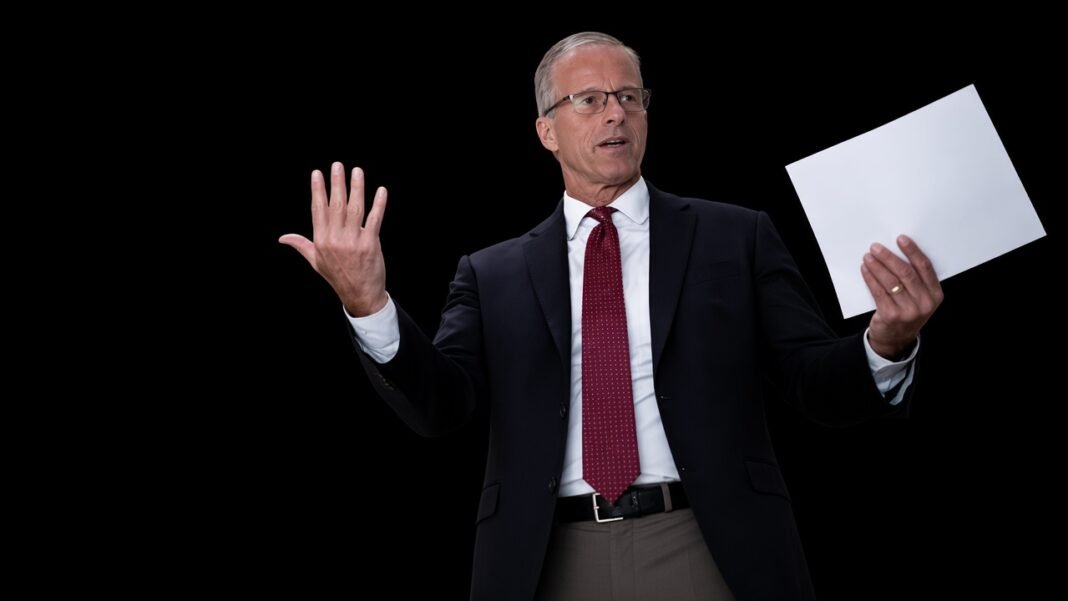
The Stop Insider Trading Act was blocked in the U.S. Senate on Wednesday in Washington, D.C., after senators voted 53-47 against advancing the measure. The bill, sponsored by Nebraska Sen. Pete Ricketts, needed 60 votes to move forward.
The Brief
- The Senate voted 53-47 against moving forward with the Stop Insider Trading Act, which sought new limits on stock trading by members of Congress.
- The bill would have stopped lawmakers from buying new publicly traded stocks and required advance notice before selling stocks.
- Senate Democrats opposed the measure, saying it did not go far enough because lawmakers could keep stocks they already owned and could still buy private stocks.
Senate Blocks Stock Trading Bill
Ricketts, a Republican facing a competitive Senate race in Nebraska, said before the vote that his bill would ban congressional insider trading. He described the proposal as a commonsense reform that Congress needed to pass.
More: Trump Cuba Tensions Rise as U.S. Pushes for Change
The measure had already passed the House in July by a 232-198 vote, with 13 Democrats joining Republicans in support. It then moved to the Senate, where it needed 60 votes to advance.
Ricketts also connected the issue to public confidence in Congress. Before the vote, he said Congress had an approval rating of 15 percent and argued that congressional stock trading was one reason Americans had lost faith in the institution.
What We Know
The legislation would have barred members of Congress from buying new stocks in publicly traded companies. Lawmakers also would have been required to give advance notice of plans to sell stocks.
The bill would not have required lawmakers to sell stocks they already owned. It also would have allowed them to buy private stocks.
Senate Democrats opposed the measure. They argued that the restrictions were not broad enough to prevent lawmakers from continuing certain profitable transactions.
Why Democrats Opposed the Bill
Senate Democratic Leader Chuck Schumer of New York criticized the proposal as too limited. He argued that calling it a stock-trading ban was misleading because lawmakers would still be allowed to own and sell stocks and, in some cases, buy them.
Schumer also pointed to a stronger bipartisan bill approved by the Senate Homeland Security Committee last year. He said House Republicans weakened that measure before it passed the House and added a provision requiring voters to present valid identification when voting.
Schumer described that voter ID provision as a “poison pill” and argued that Republicans were still allowing members of Congress to trade stocks in privately held companies, including companies they oversee.
Democrats also criticized the bill because it did not include a ban on stock trading by President Trump. Schumer said Trump and his money managers made approximately 28,700 trades between January 2025 and June 2026, citing a Bloomberg analysis.
Stock Trading Questions Around Senators
Ricketts has also faced criticism from his independent opponent, Dan Osborn, over his stock portfolio. Osborn accused Ricketts of making significant gains from his investments while serving in the Senate.
Osborn pointed to an estimated $10 million in market gains Ricketts made in April of last year, when stocks recovered after President Trump eased off his sweeping “Liberation Day” tariffs. The claim was made by Ricketts’ campaign opponent and was not presented as a confirmed finding in the draft.
Senate Democrats have also targeted Republican Sen. Dan Sullivan of Alaska over his stock trading. Democrats this month accused Sullivan of tripling his wealth while in office and cited reporting that he sold shares after attending a closed-door meeting before those stocks fell.
WinSenate, a super PAC aligned with Senate Democratic leadership, has aired an ad featuring a line cook and bartender from Homer, Alaska. The ad criticizes Sullivan over his wealth and his record on health care in Alaska.
More Stock Trading Bills Have Failed
Wednesday’s vote was the latest effort to restrict stock trading by members of Congress to fail in the Senate.
In June, Republican Sen. Cynthia Lummis of Wyoming objected to a unanimous consent request from Democratic Sen. Jon Ossoff of Georgia. Ossoff’s proposal would have banned senators from buying or selling stocks and cryptocurrency.
In July, Republican Sen. Bernie Moreno of Ohio objected to a request from Democratic Sen. Alex Padilla of California to pass the bipartisan HONEST Act. That bill would have prohibited the president, vice president and members of Congress from owning, acquiring or selling individual stocks and digital assets.
Moreno dismissed that effort at the time as a “publicity show.”
The latest Senate vote leaves the Stop Insider Trading Act short of the 60 votes needed to advance.